
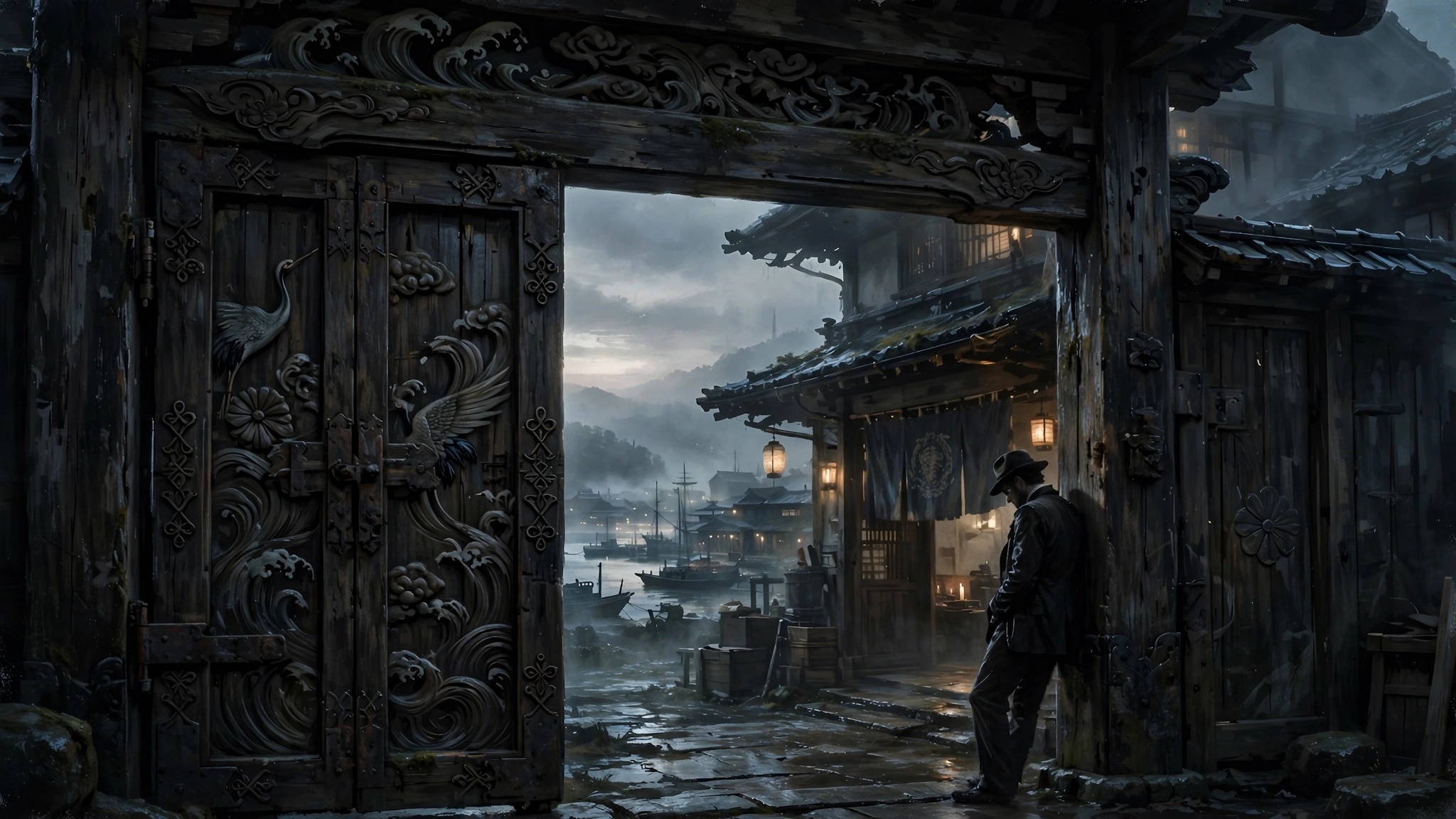
The gate gives way at three in the morning, and a sunburned foreigner in a wool suit falls through it into a garden he was never meant to enter uninvited. This is not a scene from a kaidan anthology, nor from any formally transmitted piece of Japanese folklore. It is a letter — private, unpolished, written in exhaustion — and it survives today as one of the strangest travel documents of the Meiji era: a bridge between an ordinary bad trip to Nagasaki and the oldest dragon-princess story Japan knows how to tell.
The Man at the Bellevue Hotel
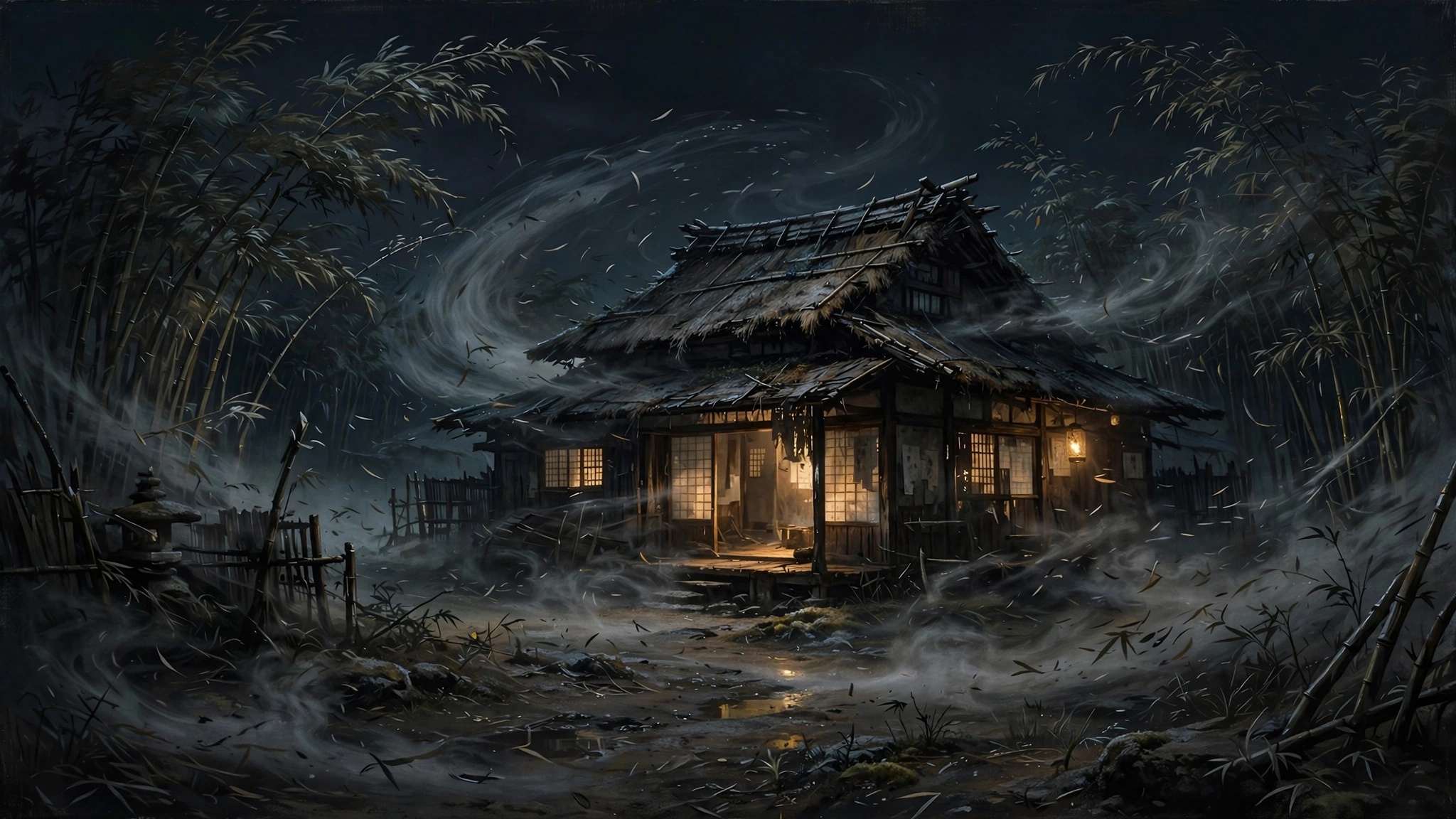
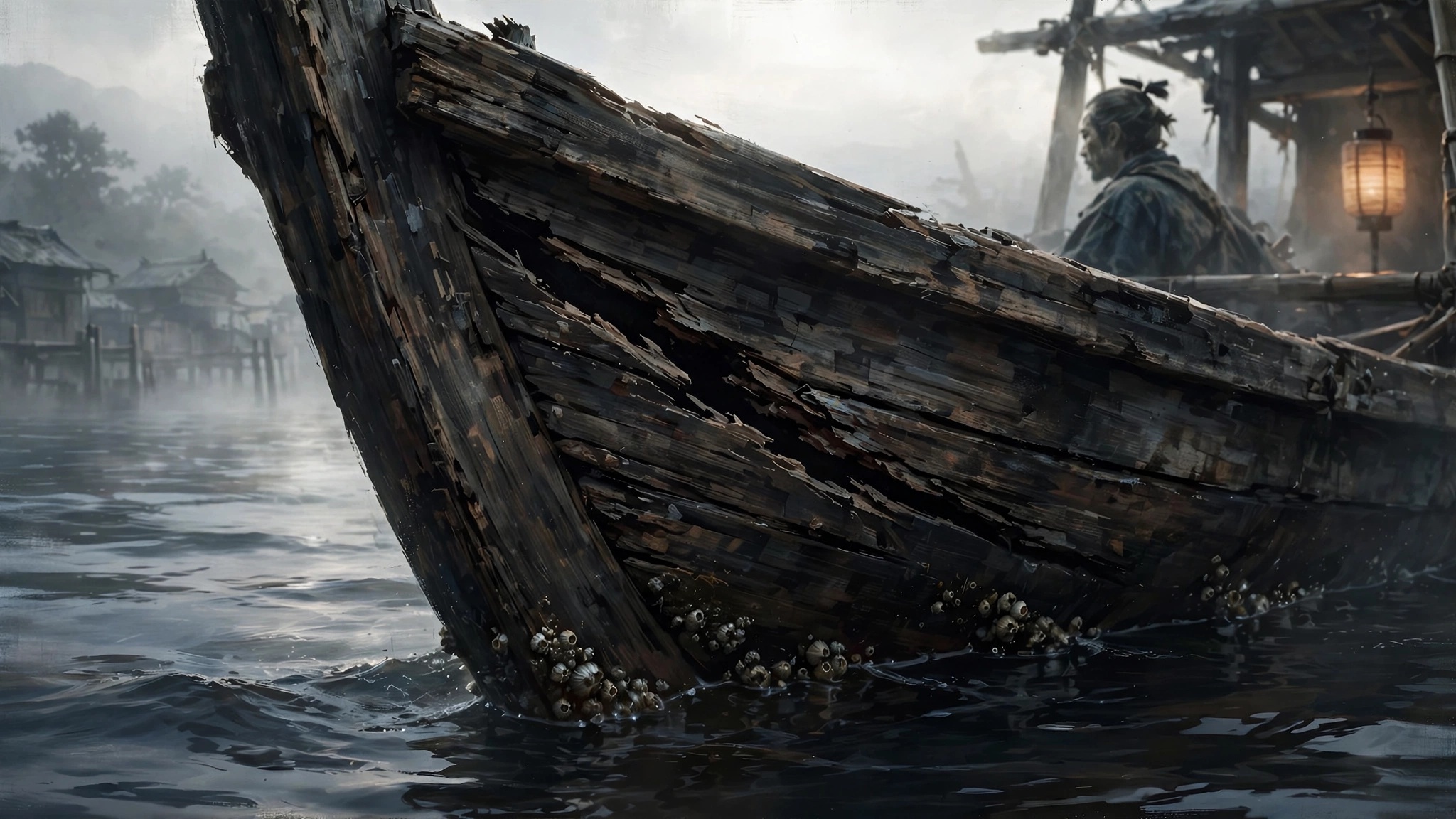 Parched Rice Fields.
The writer was Lafcadio Hearn, the Irish-Greek essayist who had, by the early 1890s, settled into teaching work in Kumamoto and into a marriage with his Japanese wife, Setsuko. Hearn wrote to her from the road, recounting a short, miserable, and ultimately transformative journey from Kumamoto to Nagasaki and back. The letter has none of the formal architecture of Edo period fiction. It reads instead like a man thinking aloud, half in anger, half in wonder, with no editor standing between his exhaustion and the page.
He arrived at the Bellevue Hotel’s locked gate after a full day of broken-bowed skiffs and overheated steamers across the Ariake Sea. No one answered his knock. The gate, unbolted by accident rather than hospitality, swung open under his own weight. He climbed the veranda steps alone and waited out the dark in a borrowed rocking chair, dressed — against every instinct built from years in Japan — in a European wool suit buttoned to the throat, because a guidebook had told him a European hotel required it.
The Crossing: Heat, Mats, and a Lion-Dog Pillow
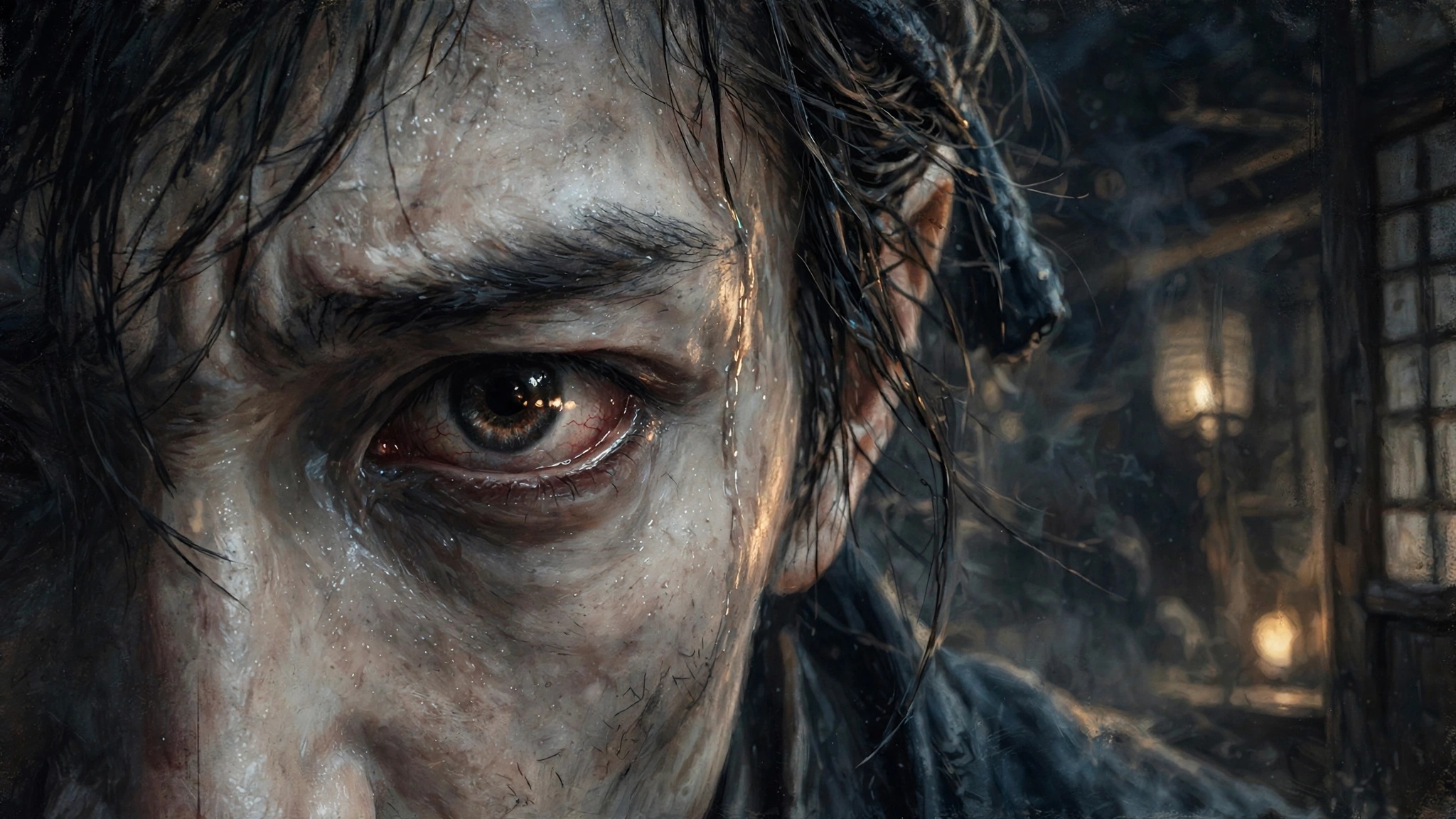
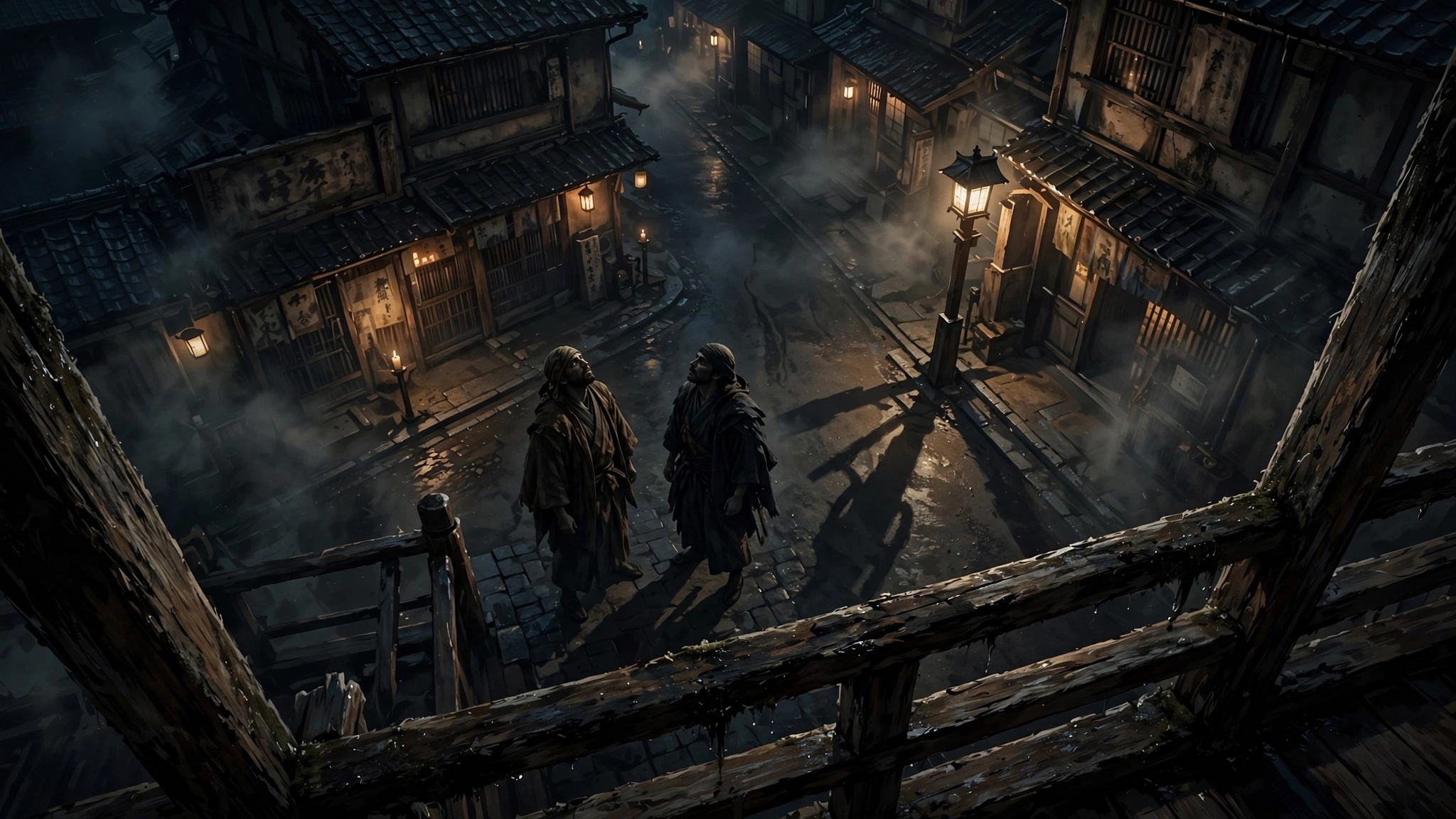 Furious Gaze at Sunset.
The outward voyage alone consumed most of a day. Hearn described the Ariake Sea as glassy and motionless, so still that watching its ripples felt less like forward motion than like drifting backward in time — an image he borrowed, consciously, from Samuel Taylor Coleridge. The skiff that carried him had a damaged bow and limped rather than sailed. Twice a shape appeared on the horizon that might have been his connecting steamer, the Taiko Maru, and twice it was the wrong vessel entirely.
When the true ship finally arrived, there was little comfort waiting aboard it. Mats covered the floor where chairs should have been. Tea was the only drink offered. The cabin held heat like a laundry’s drying room, and his pillow — thin, leather, stitched with a lion-dog wearing an elephant’s head — struck him, even through his misery, as faintly absurd. This is not the stuff of formal kaidan, but it is the texture of genuine Meiji travel: cramped, improvisational, and quietly surreal.
Nagasaki as Hell With a Hotel Attached
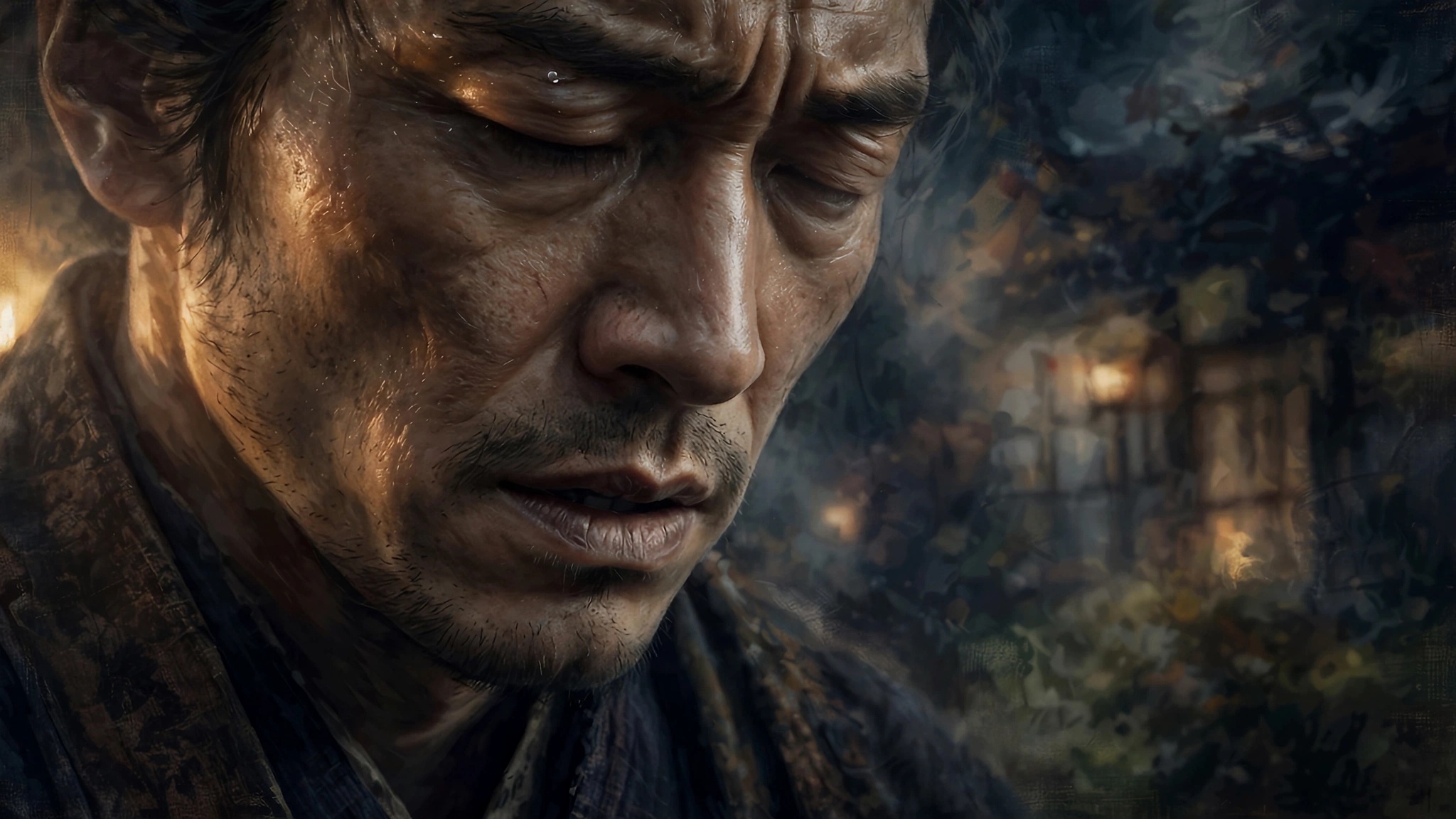 Pearl-Shell Sea Mist.
Dawn broke over the harbor in gold light Hearn compared to the imagery of old ballads, and for a moment the journey seemed to redeem itself. The redemption did not last. By midday the heat inside the European-style hotel — European furniture, European walls, Kyushu sun — had turned the building into something closer to an oven than a residence. Hearn called it worse than any tropical heat he had known, worse, he insisted, than a Venezuelan afternoon.
He toured the city anyway by rickshaw, climbing its hills and admiring a harbor he judged, with complete sincerity, among the most beautiful in Japan — the kind a painter would etch and a photographer would frame. He found almost nothing to buy: no imported goods, no books, no other foreigners to talk to. On one hill he discovered a torii gate cast entirely in blackened metal, top-heavy and graceless, and declared in the letter that its designer deserved to be cut down with a sword — a flash of comic fury that reveals how close to the edge the heat had pushed him.
By six that evening he had decided to flee. “Hell,” he wrote, was not the heat itself, which he claimed to love in principle, but heat married to foolish Western custom — wool suits, closed collars, a building designed for a different climate entirely. He begged the steamship office for any departure before morning and was granted one at three a.m. While he waited on the veranda, men of poor appearance called up offers of company for the night; he retreated indoors rather than answer, and sat in the stifling dark until the promised boat arrived.
The Urashima-ya: Where the Letter Changes Its Weather
 Children at the Spring.
The return route ran through the port of Misumi, where a connecting boat to Hyakkan was not running that day. Stranded, Hearn found lodging at the Urashima-ya — a Western-built inn deliberately named for Urashima Tarō, the fisherman of Japanese folklore carried beneath the waves by a dragon princess. From this point the letter stops being a complaint about heat and hotels and becomes something closer to a waking fever-dream shaped entirely by that old story.
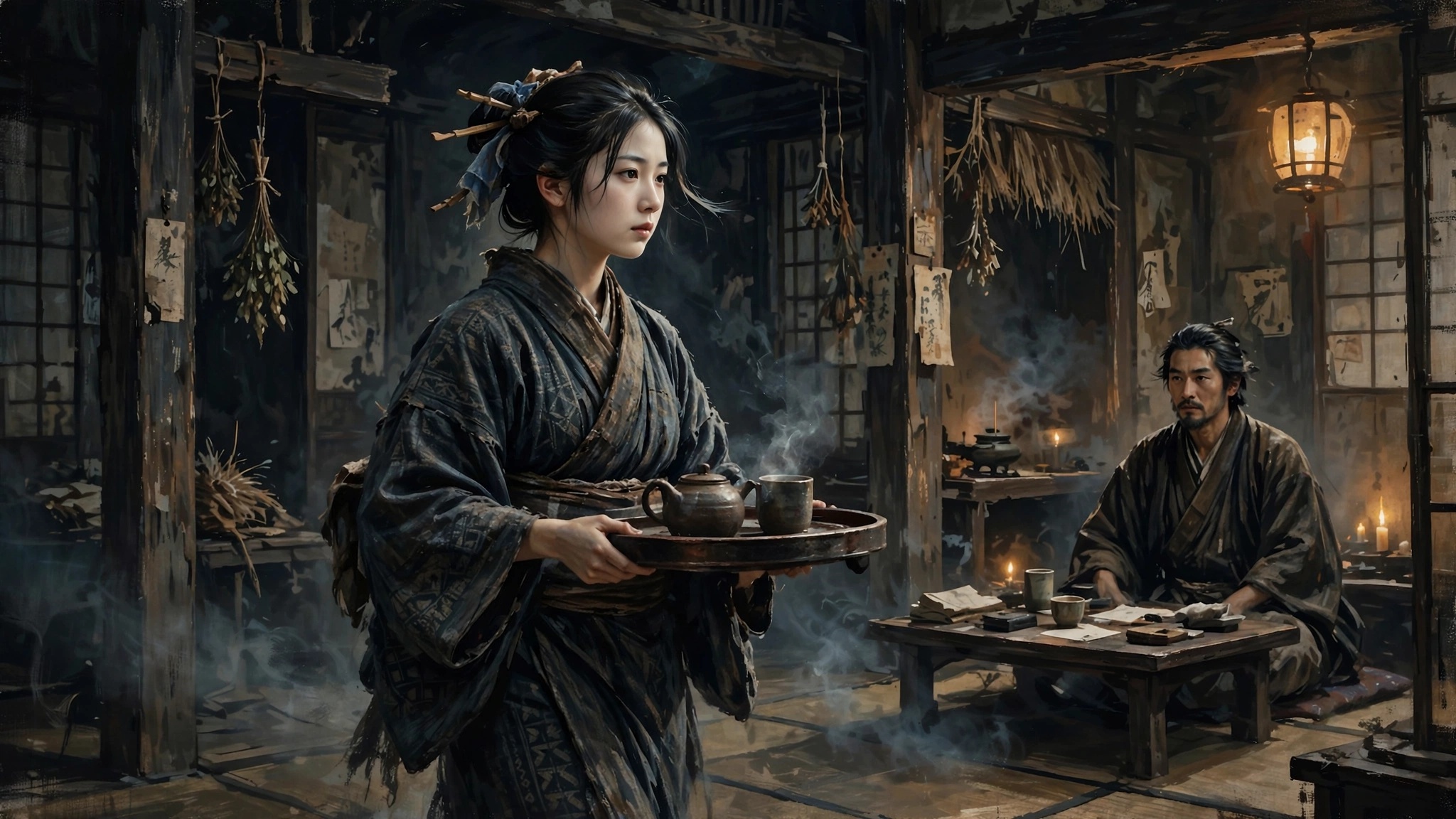
The innkeeper struck him as dragonfly-light, her voice like a glass wind-bell. She arranged a rickshaw and a fine breakfast for a total of forty sen. After the Bellevue, Hearn wrote, it felt like being reborn at the center of a great lotus in paradise — though he allowed that this was perhaps only the relief of having escaped the worst hotel he had known. Outside, a soft blue summer sea-mist had settled over hills and horizon alike, the color, he said, of the inside of a pearl shell.
Otohime on the Telegraph Road
Half-asleep in the rickshaw, Hearn’s “small soul” — his own phrase — drifted into the old legend outright. A fairy boat appeared to him, and in it stood Otohime, the Dragon King’s daughter, inviting him across what felt like a thousand years to Ryūgū-jō, her father’s palace beneath the southern sea.
He answered her, he wrote, in the only Japanese halting enough to be honest: that he had already sent the telegram home and had to return to Kumamoto. She accepted this, instructing him only to pay the rickshaw man seventy-five sen, and gave him the tamatebako — the forbidden box Urashima Tarō was warned never to open — so that he might return to her so long as it stayed closed.
Along the telegraph wires above the road sat hundreds of small white-breasted birds, every one facing the sea, not a single tail turned toward him. He counted them without meaning to and fell asleep for real; the princess returned at the edge of his dream, repeating only the instruction about the rickshaw fare. He woke to drums sounding from every village along the road, beaten for rain that would not come beneath clouds too thin and too white to hold any — ghosts, he wondered, of clouds a thousand years dead, or the summer mist that had escaped from Urashima’s box the day he lifted its lid.
The Walk Home and the Fan That Remained
In the village of Nagahama, children bathed at a spring below the hill while a girl drew cold water for his rickshaw man, her thin summer robe slipping just enough to show a body not yet grown into itself — a detail Hearn records with the same unflinching plainness he gives the drums and the birds. His second pair of rickshaw men cheated him as the first had, and he dismissed them, took up his own bag, and walked the final miles through the rice fields alone, watched the whole way by birds that never turned their tails toward the road.
He reached Kumamoto at last as the shadows stretched long — sunburned, peeling, unfed since nine that morning, without real sleep in three days. He was, by his own account, entirely happy to be home. Nagasaki remained in memory only as a hell with a hotel attached to it, and he swore he would never return.
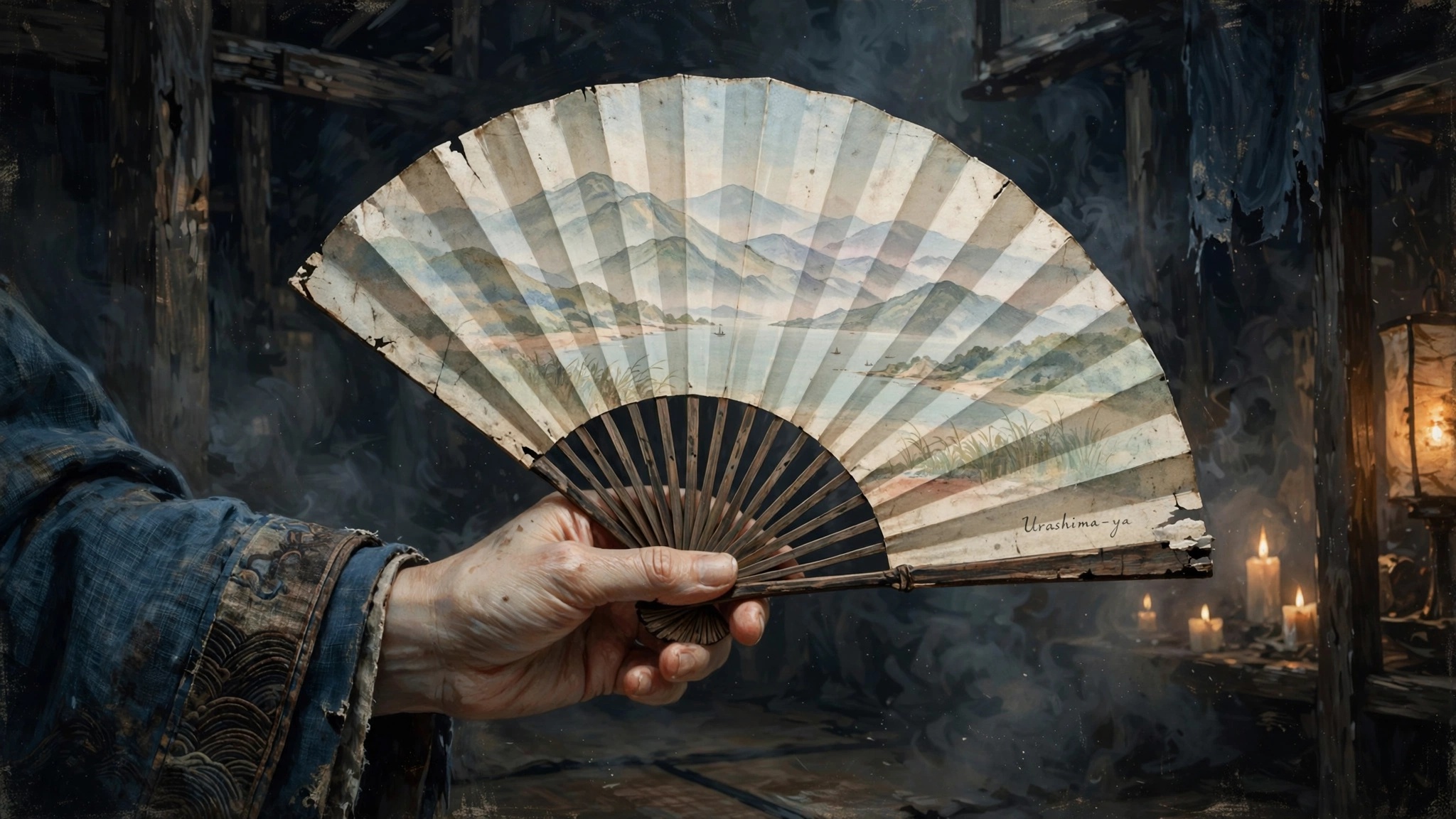
What came home with him was a paper fan bought at the Urashima-ya, painted with mountains and summer sea and the inn’s name across the corner. He wrote that he would look at it often, and that each time he did, the dream of that blue afternoon would return to him whole — because the box, he was certain, would never be opened. Asked once by Setsuko what sum could persuade him to spend one more week at the Bellevue, he answered that no amount of money could do it. Only two things could move him: to live forever young in the Dragon King’s palace beneath the sea, or to be carried, by Amida’s grace, into paradise outright.
Historical Legacy & Archival Footnotes
Hearn’s Nagasaki letter occupies an unusual place in the literature of Japanese folklore. It is not a formally transmitted kaidan like those gathered by Asai Ryōi in Otogi Bōko (1666), nor a crafted literary ghost tale in the manner of Ueda Akinari’s Ugetsu Monogatari (1776). It is private correspondence, later collected among Hearn’s published letters and travel writings, valuable precisely because it shows a Western-born interpreter of Japan absorbing a native legend so completely that exhaustion and heat-delirium reshaped his own travel diary into a retelling of Urashima Tarō.
The legend itself is ancient, recorded in fragments as early as the Nihon Shoki and the Man’yōshū, long before Hearn ever boarded a steamer across the Ariake Sea. What his letter preserves is not the legend’s origin but its living persistence — an inn still named for the fisherman, a region still shaped by his story, centuries after the first written mention. The Urashima-ya of Misumi stands as evidence that Japanese place-naming treats folklore not as relic but as ongoing address.
Nothing in the historical record confirms what became of the actual paper fan, nor whether Hearn ever revisited Nagasaki, though his own account insists he never did. The honesty of the letter — its willingness to record petty fury at a torii gate alongside genuine visionary wonder — is precisely what later made Hearn’s writing a foundational bridge between Japanese oral tradition and Western audiences. He did not decorate the legend. He simply let it catch him mid-collapse, on a rickshaw road, between two ports, in the worst heat of his life.
Primary Texts & Scholarly References
- Lafcadio Hearn, Letters from Japan (correspondence to Setsuko Koizumi, early 1890s), collected in later editions of Hearn’s published letters.
- Asai Ryōi (1666), Otogi Bōko, foundational Edo-period kaidan collection.
- Ueda Akinari (1776), Ugetsu Monogatari, literary ghost-tale tradition contemporaneous with Hearn’s source material.
- Nihon Shoki (720 CE) and Man’yōshū (8th century), earliest textual fragments referencing the Urashima Tarō legend.
- Yanagita Kunio (1910), Tōno Monogatari, comparative reference for orally transmitted Japanese folk narrative.
- National Diet Library digital collections, holding period materials related to Meiji-era Nagasaki and Kumamoto travel accounts.
Soundtrack & Audio Credits
Music: ‘Creature’ by Kraosando (https://kraosando.bandcamp.com) — Licensed under CC BY 4.0